
第二回フィールドワーク(沖縄本島)Second fieldwork (Okinawa Island)
2024年3月19〜21日 / プレスリリース 2024年4月1日19–21 March 2024 / Press release, 1 April 2024
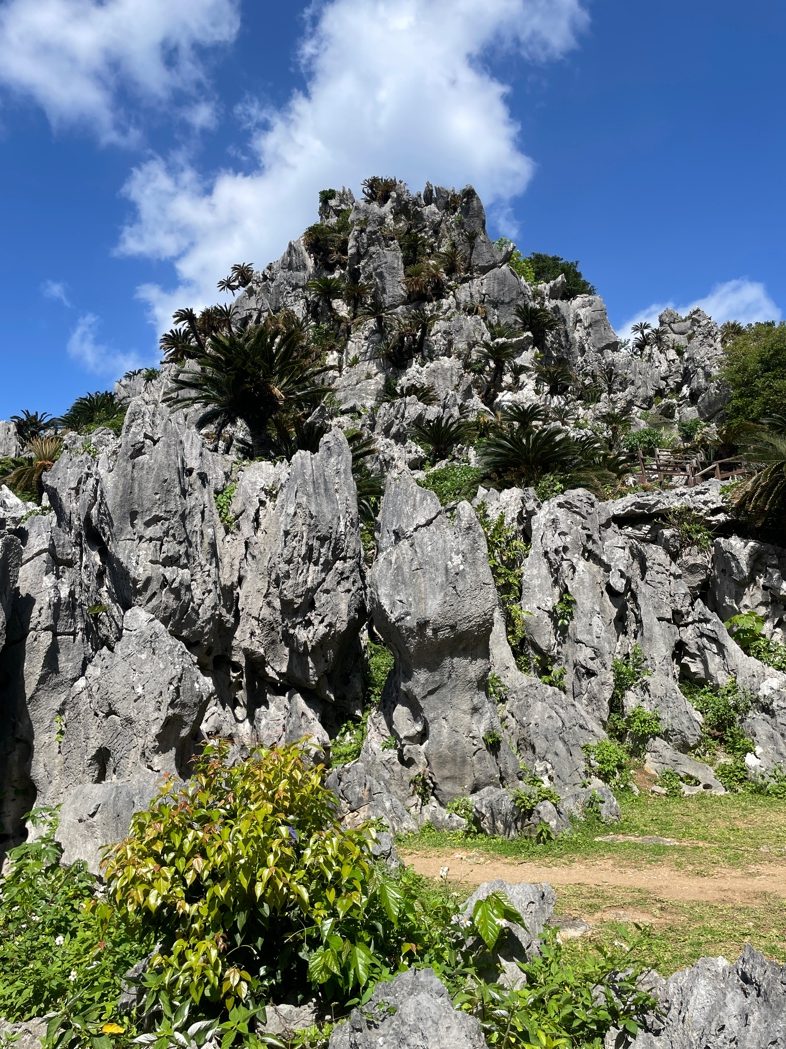
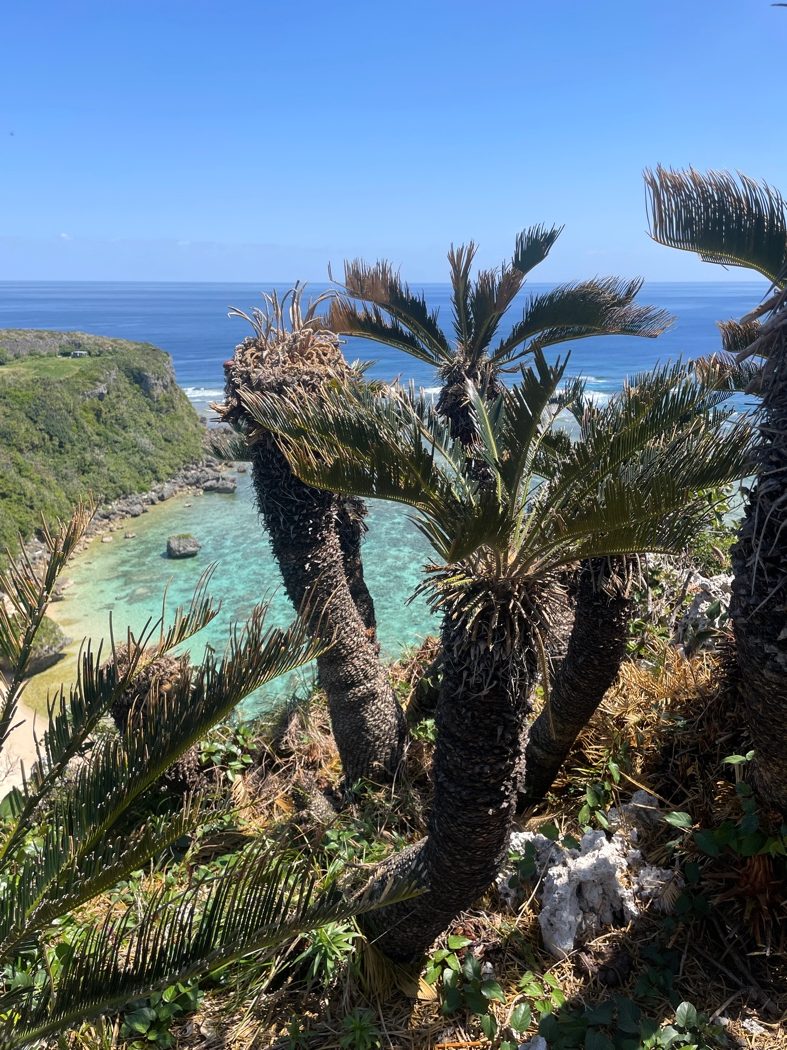
左:大石林山、右:うるま市海岸部(いずれも2024年3月)Left: Daisekirinzan. Right: the Uruma coast (both March 2024)
概要
2023年末に奄美大島で行った第一回に続き、沖縄本島で第二回のフィールドワークを行いました。目的は、CASの被害を受けている日本ソテツ(Cycas revoluta)の遺伝的多様性を残すための、域外保全を前提としたタネと子株の採取、およびそれに関連する調査・情報収集です。
- 本島北部の大石林山、中東部のうるま市海岸部を中心とする複数の自生地で、雌株10株・雄株1株から、子株100株以上とタネ100個以上を採取しました
- 採取はいずれも、行政や地権者など関係各所から必要な許可を受けて行いました
- タネと子株は、採取地点ごとの位置情報(ロケーションID)を整理したうえで、2024年第2四半期をめどに、国内外の複数の植物園・研究施設に栽培保全を委託する予定です
採取記録
いずれも株ごとにロケーションIDを付けて採取しています。
株ごとのロケーション一覧(採取地点の詳しい位置情報)は、盗掘などによる自生地の環境破壊やダメージを避けるため、公開していません。研究などで必要な方は、info@japancycadsociety.org までご連絡ください。
| 場所 | 雌株 | 雄株 | 種子数 | 子株数 |
|---|---|---|---|---|
| 大石林山 | 6 | 0 | 90 | 59 |
| うるま市海岸部 | 3 | 1 | 35 | 45 |
| 識名園 | 1 | 0 | 0 | 19 |
| 合計 | 10 | 1 | 125 | 123 |
関係機関との情報交換
- 大石林山
- 一般財団法人 沖縄美ら島財団
- 那覇市役所
沖縄本島の状況
沖縄本島でのCASの被害は、現時点では必ずしも危機的ではなく、全体としては、少なくとも次のシーズンの保全でも十分間に合うと推測されました。ただし、おくまビーチ裏の自生地や一部の植栽地では完全に枯れ込みが進んでいるなど、予断を許さない状況です。
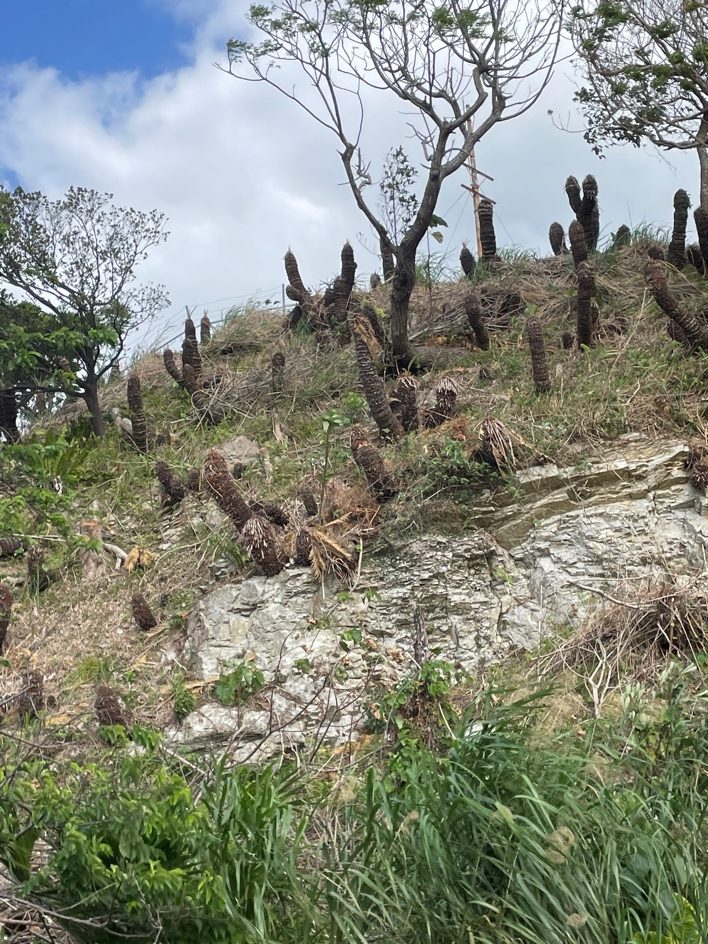
おくまビーチ付近の被害(2024年3月)
沖縄のソテツは、ほかの草木との競争から、土壌がやせていても日当たりを確保できる、海岸や崖の石灰岩質の場所が本来の自生地だと考えられます。また、特に本島南部は第二次世界大戦の影響が大きく、植えられたものか自生のものかの区別がつきにくいようです。今回は本島北部と中西部の自生と思われる株を確保できたので、今後は中東部と南部の株についても同じ作業を進め、本来の遺伝的多様性を確保できるよう努めます。
今後に向けて
CASの被害は、目で見て確認できた時点ですでにほぼ広まっていると考えるべきです。被害が確認されている奄美地域では、タネを確保できるのは今年の冬か、せいぜい来季までと思われます。九州地域でも同様の対応を速やかに進める必要があります。今期の奄美大島・沖縄本島での活動をひな形として、今後被害の拡大が予想される南西諸島や九州各地を含め、この活動を続けていく予定です。この問題に関心をお持ちの方のご協力を、広くお願いいたします。
Summary
Following the first fieldwork on Amami Ōshima at the end of 2023, the Society carried out its second fieldwork on Okinawa Island. The aim was to collect seeds and offsets of the Japanese cycad (Cycas revoluta) for ex-situ conservation, and to conduct related research, to preserve the genetic diversity of a species now being damaged by CAS.
- Over 100 offsets and over 100 seeds were collected from 10 female plants and 1 male plant in several habitats, mainly Daisekirinzan in the north and the coast of Uruma City in the central east
- All collection was done with the necessary permission from government authorities, landowners and others
- With a location ID recorded for each plant, the seeds and offsets will be entrusted to botanical gardens and research institutes in and outside Japan during the second quarter of 2024
Collection record
Each plant was collected with its own location ID.
The list of plant locations (detailed collection points) is not published, to protect the habitats from poaching and other damage. If you need it for research or similar purposes, please contact us at info@japancycadsociety.org.
| Site | Female | Male | Seeds | Offsets |
|---|---|---|---|---|
| Daisekirinzan | 6 | 0 | 90 | 59 |
| Uruma coast | 3 | 1 | 35 | 45 |
| Shikinaen Garden | 1 | 0 | 0 | 19 |
| Total | 10 | 1 | 125 | 123 |
Meetings
- Daisekirinzan
- Okinawa Churashima Foundation
- Naha City Office
The situation on Okinawa Island
Overall, CAS damage on Okinawa Island is not yet critical, and we estimate that conservation work next season will still be in time. However, some habitats, such as the one behind Okuma Beach, and some planted areas have already died off completely, so the situation remains uncertain.
Damage near Okuma Beach (March 2024)
Because of competition with other plants, the native habitat of Okinawan cycads is thought to be coastal and cliff-side limestone, where sunlight is available despite poor soil. In the south of the island, the impact of World War II was severe, and it is hard to tell planted cycads from wild ones. Having secured what appear to be wild plants from the north and central west, we will continue the same work for the central east and the south, to preserve the island’s original genetic diversity.
Looking ahead
By the time CAS damage is visible, it should be assumed to have already spread. In Amami, where damage has been confirmed, this winter or at most next season may be the last chance to secure seeds, and similar action is needed quickly in Kyushu. Using this season’s work on Amami Ōshima and Okinawa Island as a template, we plan to continue in the Nansei Islands and across Kyushu, where further spread is expected. We welcome cooperation from anyone interested in the CAS problem.