
第一回フィールドワーク(奄美大島)First fieldwork (Amami Ōshima)
2023年12月15〜18日 / プレスリリース 2024年1月4日15–18 December 2023 / Press release, 4 January 2024
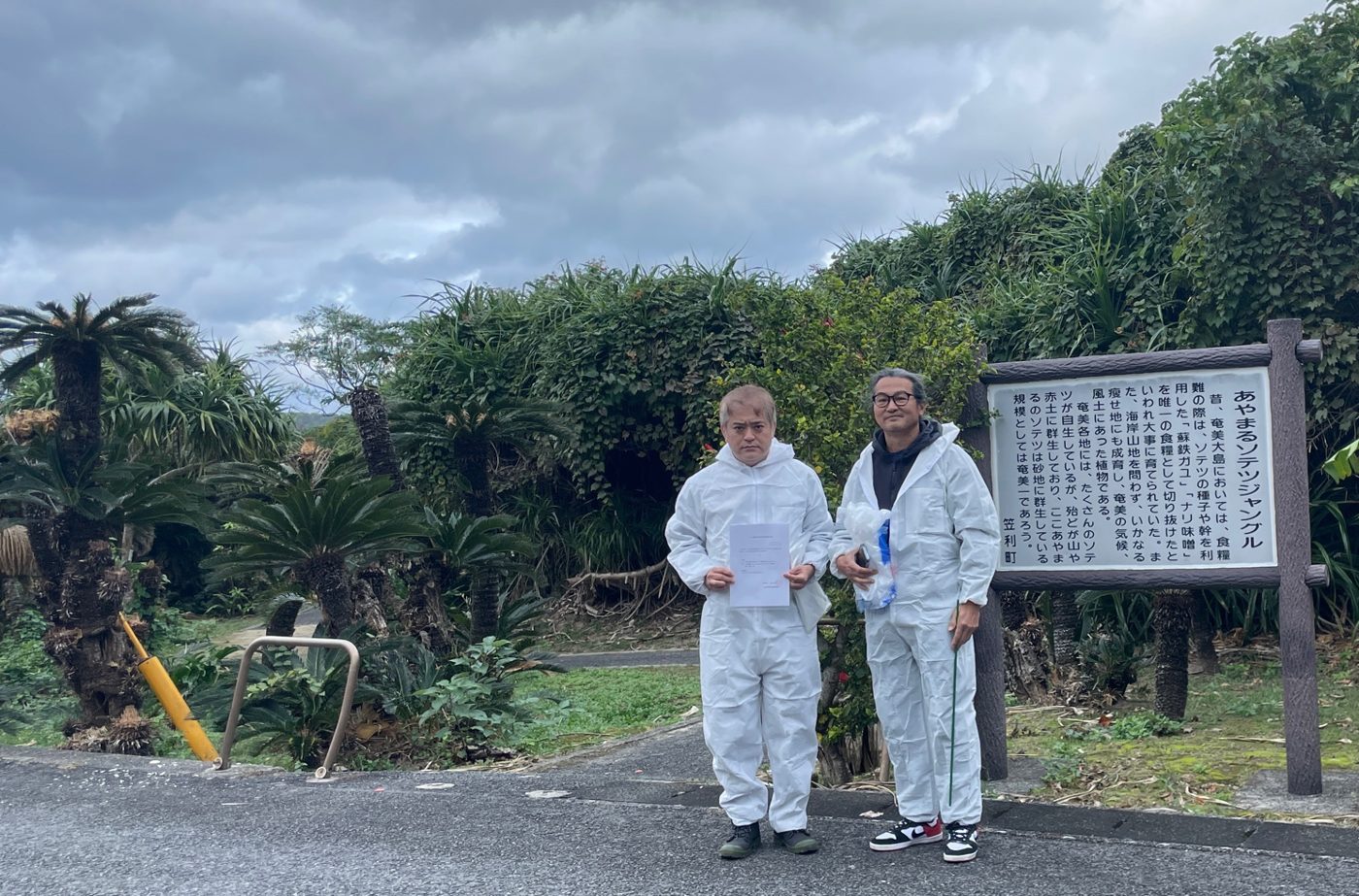
採取の様子(奄美大島、2023年12月)Collecting on Amami Ōshima, December 2023
概要
CASによる壊滅的な被害を受けている日本ソテツ(Cycas revoluta)の遺伝的多様性を残すため、域内保全・域外保全を前提としたタネと子株の採取、およびそれに関連する調査・情報収集を目的として、奄美大島で第一回のフィールドワークを行いました。
- あやまる岬・安木屋場・打田原を中心とする複数の自生地で、雌株25株からタネ約500個と、若干数の子株を採取しました
- 採取はいずれも、行政や地権者など関係各所から必要な許可を受けて行いました
- タネは、採取地点ごとの位置情報(ロケーションID)を整理したうえで、域外保全として国内外の複数の植物園・研究施設に保存管理を委託する予定です
- 子株は、域内保全として奄美大島内の複数の協力者のもとで管理しています
採取記録
いずれも株ごとにロケーションIDを付けて採取しています。
株ごとのロケーション一覧(採取地点の詳しい位置情報)は、盗掘などによる自生地の環境破壊やダメージを避けるため、公開していません。研究などで必要な方は、info@japancycadsociety.org までご連絡ください。
| 場所 | 採取雌株数 | 採取種子数 | 採取子株数 |
|---|---|---|---|
| あやまる岬 | 16 | 188 | 0 |
| 安木屋場 | 5 | 124 | 5 |
| 打田原 | 4 | 192 | 0 |
| 合計 | 25 | 504 | 5 |
関係機関との情報交換
- 環境省 奄美群島国立公園管理事務所
- 龍郷町役場
- 奄美新聞(掲載記事)
また、CASによるソテツの被害に心を痛めている地元の皆さんとも交流し、奄美大島だけでなく奄美群島の各島で同様の活動を行うための協働体制をつくることができました。群島の複数の場所で、すでに採取の準備を進めています。
被害の状況
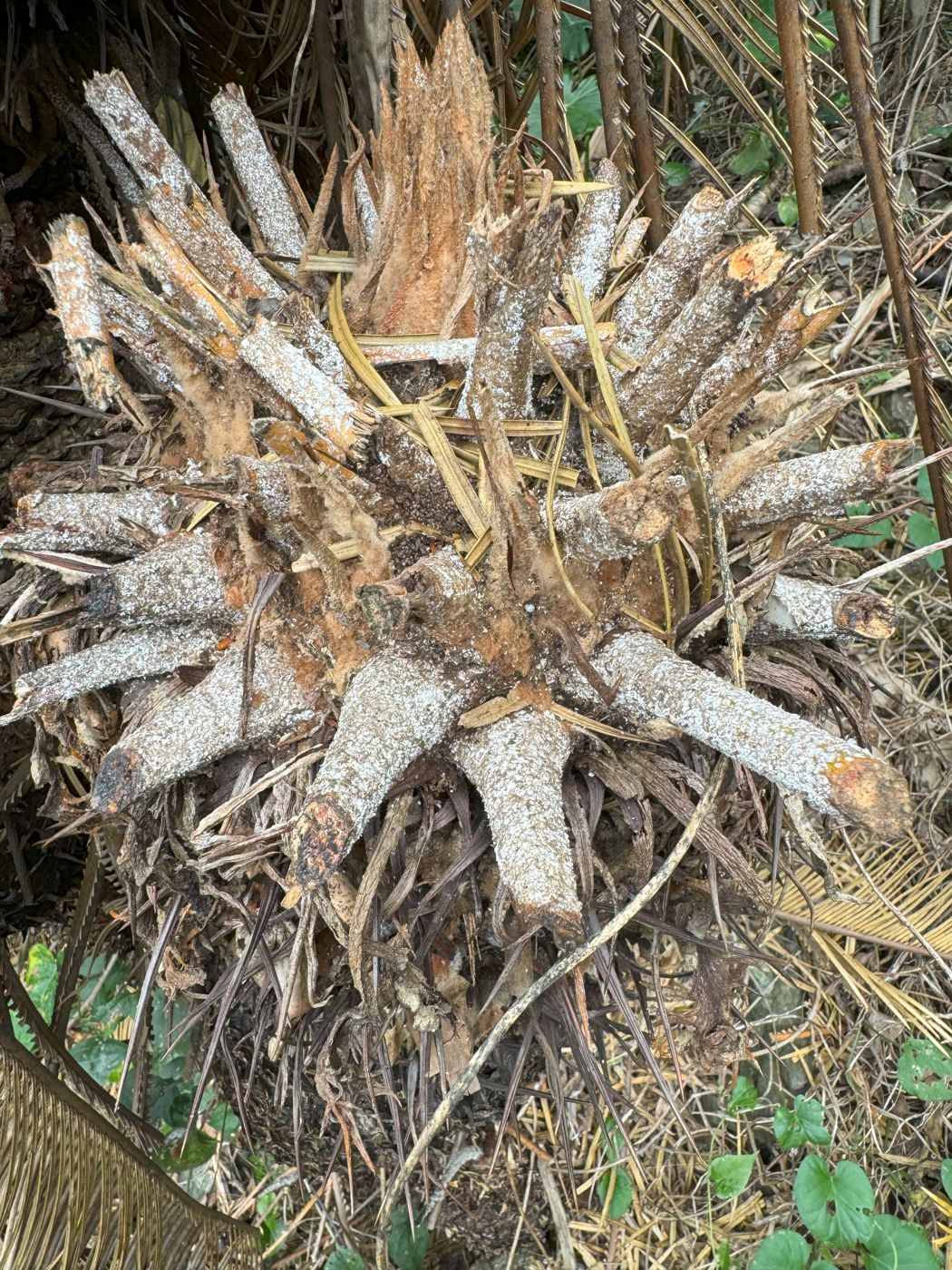
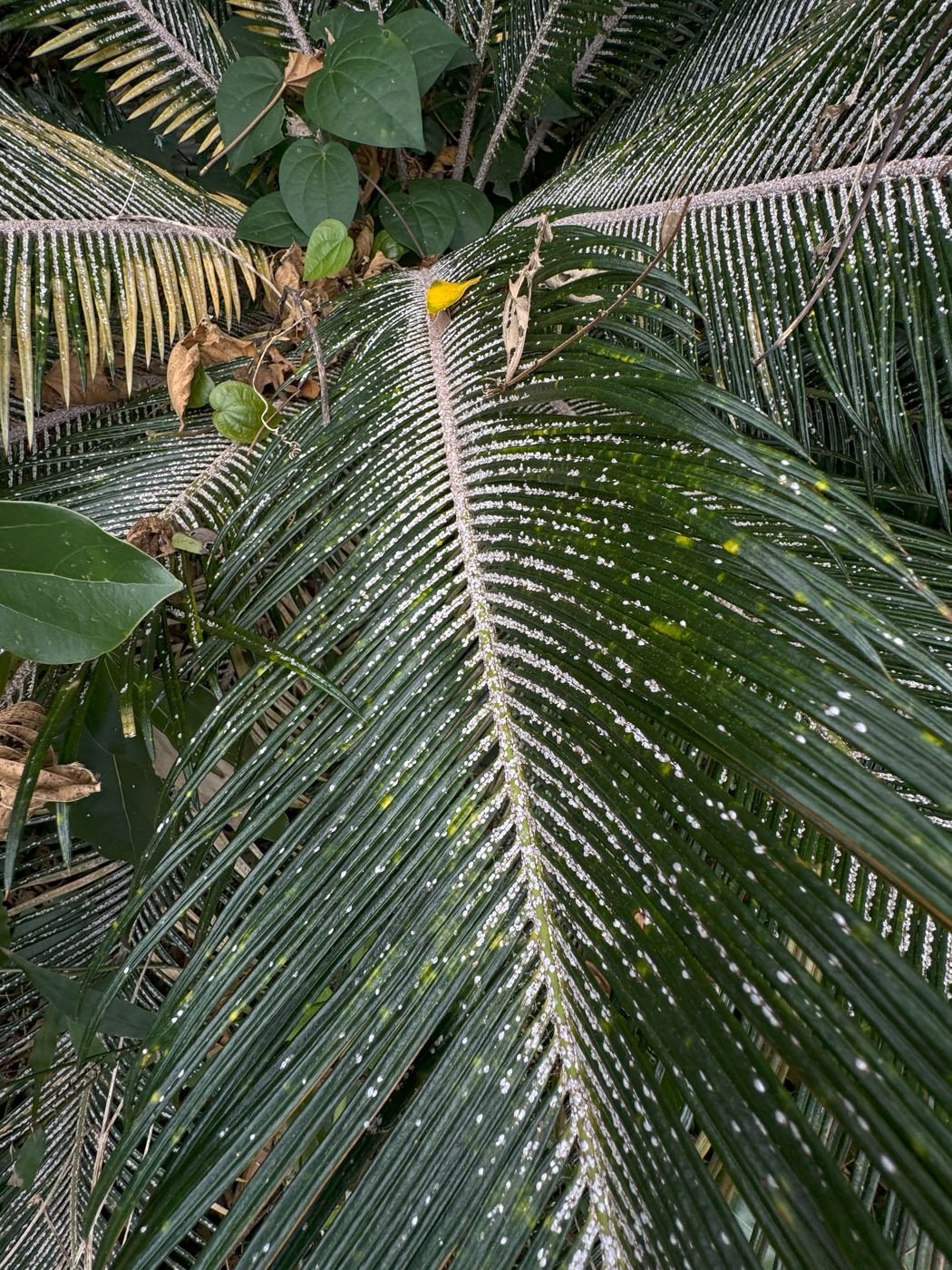
ソテツに付くCAS
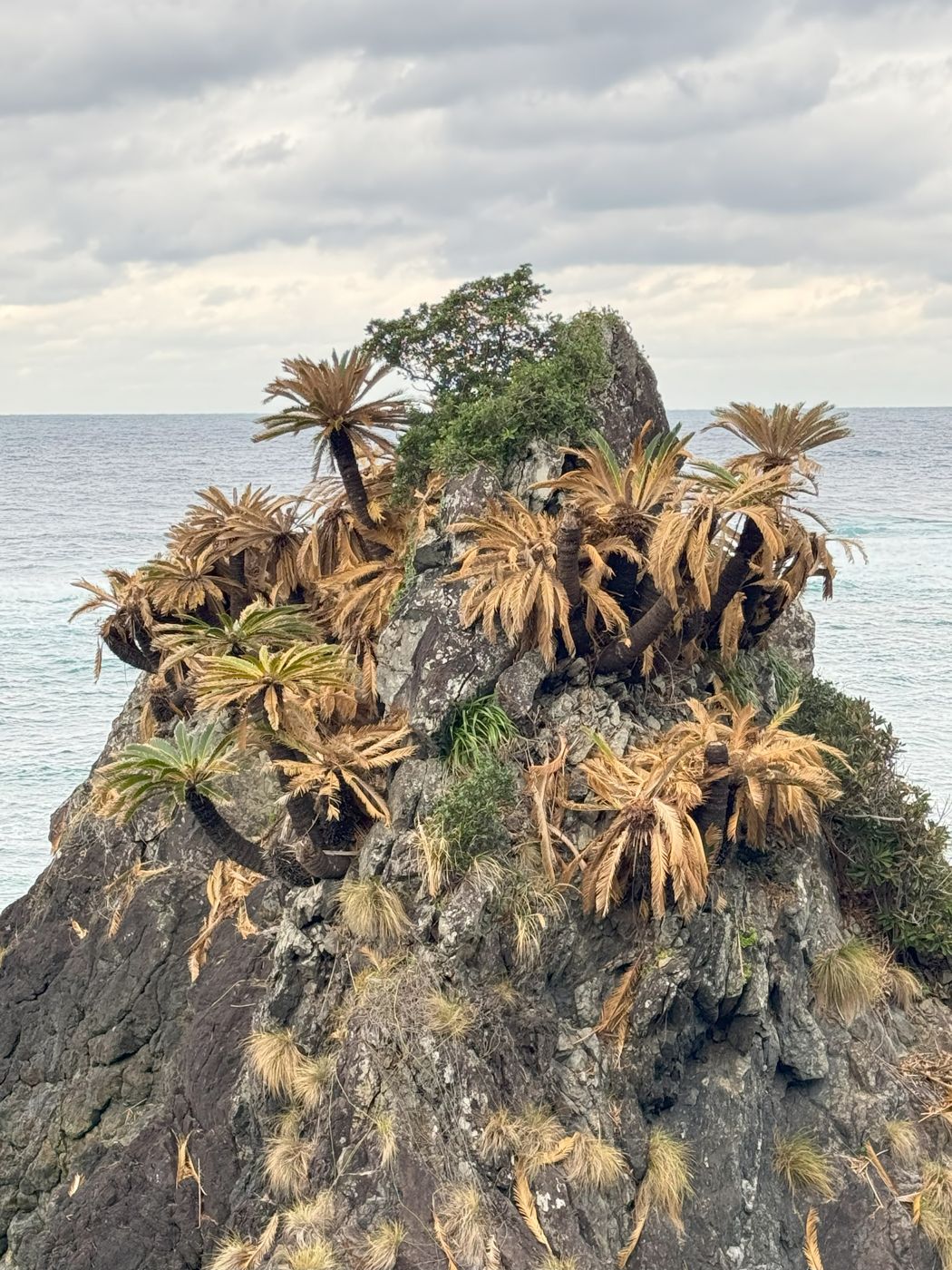
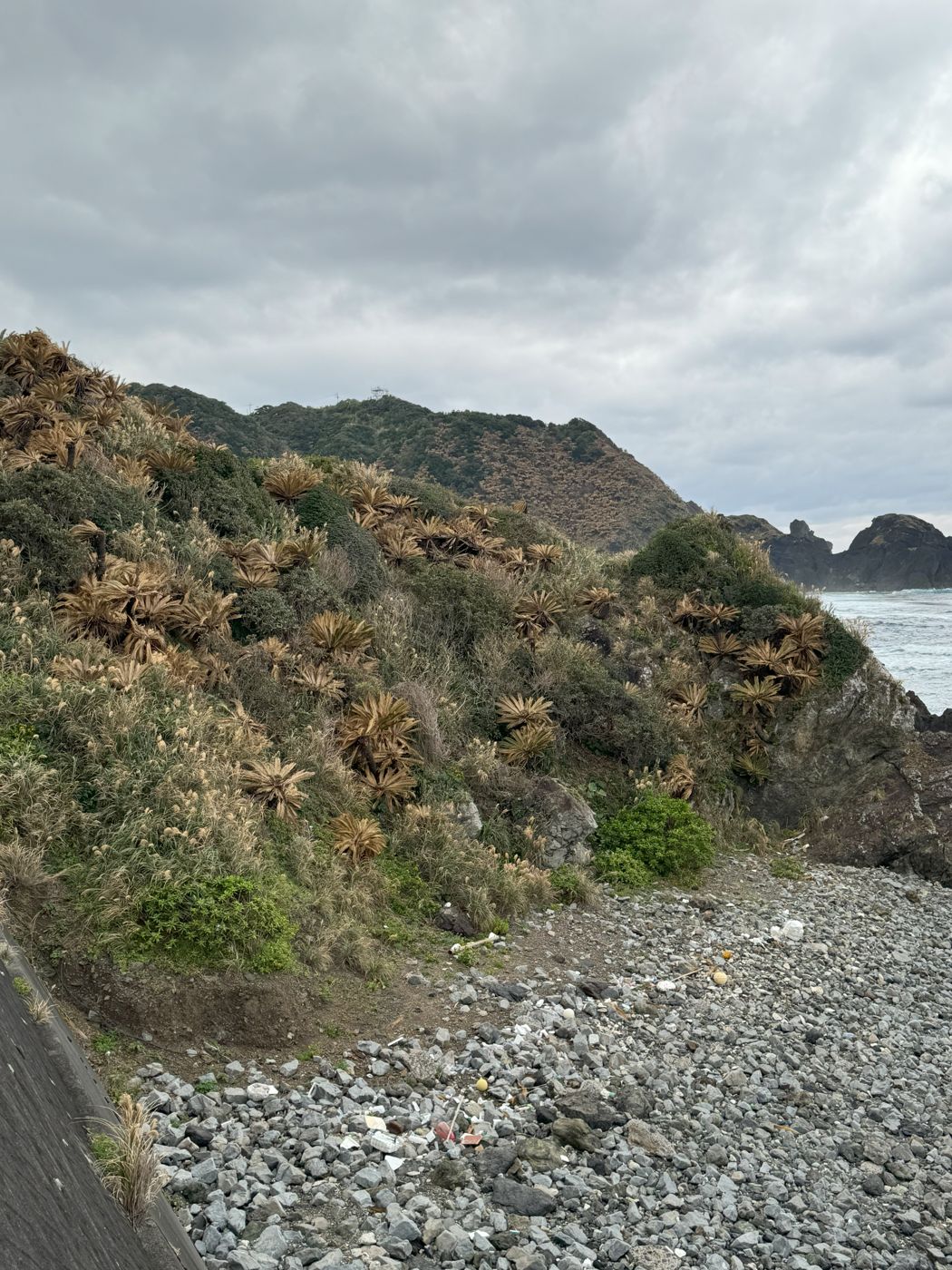
奄美市名瀬大字有良、2023年12月
奄美大島の、特に北部の海岸線では、すでにほとんどのソテツが枯れ込み、複数の自生地が壊滅状態にあります。
奄美大島では、ソテツのタネを「ナリ粉」として食べる習慣があり、土地の境界や道路沿いにも植えられるなど、ソテツは社会的・文化的に深く根ざした植物です。もともとは急な斜面の段々畑の土留めとして境界に植えられていたもので、段々畑がなくなった今も海岸線に大群落をつくり、観光資源となる景観と、土砂崩れを防ぐ役割を担っています。こうした群落がCASで失われると、土砂崩れなどの災害や、斜面をコンクリートで固める工事による景観への影響も心配されます。
今後に向けて
CASは葉や幹だけでなく根にも寄生するため駆除がきわめて難しく、繁殖力も高いため、半年ほどで株だけでなく自生地全体を壊滅させてしまいます。直近のグアム島・ロタ島の例では、100%近い致死率を記録したといわれます。有効な農薬があっても、二次的な環境被害のおそれがあるため、選択肢は限られています。
一方、過去の事例からは、CASの被害は永久に続くわけではなく、数年単位でピークを迎えて落ち着くことも示唆されています。そのため当会は、民間団体としてできる範囲の対応として、失われる遺伝情報を確保する域内保全・域外保全を活動の中心にしています。
CASの被害は、目で見て確認できた時点ですでにほぼ広まっていると考えるべきです。被害が確認されている奄美・沖縄地域でタネを確保できるのは、今年の冬か、せいぜい来季までと思われます。今回の取り組みをひな形として、沖縄や、今後被害の拡大が予想される九州各地でも活動を進めていきます。この問題に関心をお持ちの方のご協力を、広くお願いいたします。
Summary
The Society carried out its first fieldwork on Amami Ōshima to collect seeds and offsets of the Japanese cycad (Cycas revoluta) for in-situ and ex-situ conservation, and to conduct related research, in order to preserve the genetic diversity of a species now suffering devastating damage from CAS.
- About 500 seeds and a few offsets were collected from 25 female plants in several habitats, mainly Cape Ayamaru, Ankiyaba and Uttabaru
- All collection was done with the necessary permission from government authorities, landowners and others
- With a location ID recorded for each collection point, the seeds will be entrusted to botanical gardens and research institutes in and outside Japan for ex-situ conservation
- The offsets are being cared for by local partners on Amami Ōshima as in-situ conservation
Collection record
Each plant was collected with its own location ID.
The list of plant locations (detailed collection points) is not published, to protect the habitats from poaching and other damage. If you need it for research or similar purposes, please contact us at info@japancycadsociety.org.
| Site | Female plants | Seeds | Offsets |
|---|---|---|---|
| Cape Ayamaru | 16 | 188 | 0 |
| Ankiyaba | 5 | 124 | 5 |
| Uttabaru | 4 | 192 | 0 |
| Total | 25 | 504 | 5 |
Meetings
- Amami Islands National Park Office, Ministry of the Environment
- Tatsugō Town Office
- Amami Shimbun newspaper (article, in Japanese)
We also met local people distressed by the CAS damage, and set up a framework to carry out similar work not only on Amami Ōshima but on other islands of the Amami archipelago. Preparations for collection at several sites are already under way.
Damage
CAS on cycads
Ura, Naze, Amami City, December 2023
Along the coast of Amami Ōshima, especially in the north, most cycads have already died and several habitats have been destroyed.
On Amami, cycad seeds have traditionally been eaten as “nari-ko” flour, and cycads are planted along property lines and roads — a plant deeply rooted in local society and culture. Originally planted to hold the soil at the edges of terraced fields on steep slopes, they still form large colonies along the coast long after the terraces fell out of use, creating a landscape valued by visitors and helping to prevent landslides. If these colonies are lost to CAS, we are concerned about landslides and about the impact on the landscape of concrete slope works built in response.
Looking ahead
CAS infests not only leaves and trunks but also roots, making it extremely difficult to eradicate, and it breeds so quickly that it can destroy not just plants but whole habitats in about six months. In the recent cases of Guam and Rota, mortality reportedly approached 100%. Even where effective pesticides exist, the risk of secondary environmental damage limits the options.
Past cases suggest, however, that CAS damage does not last forever and tends to peak and stabilize over several years. As a private organization, the Society therefore focuses on what it can do: securing genetic information before it is lost, through in-situ and ex-situ conservation.
By the time CAS damage is visible, it should be assumed to have already spread. In Amami and Okinawa, where damage has been confirmed, this winter or at most next season is likely the last chance to secure seeds. Using this fieldwork as a template, we plan to extend the work to Okinawa and to Kyushu, where further spread is expected. We welcome cooperation from anyone interested in the CAS problem.